It would be nearly impossible for businesses to design for each and every individual device. Instead
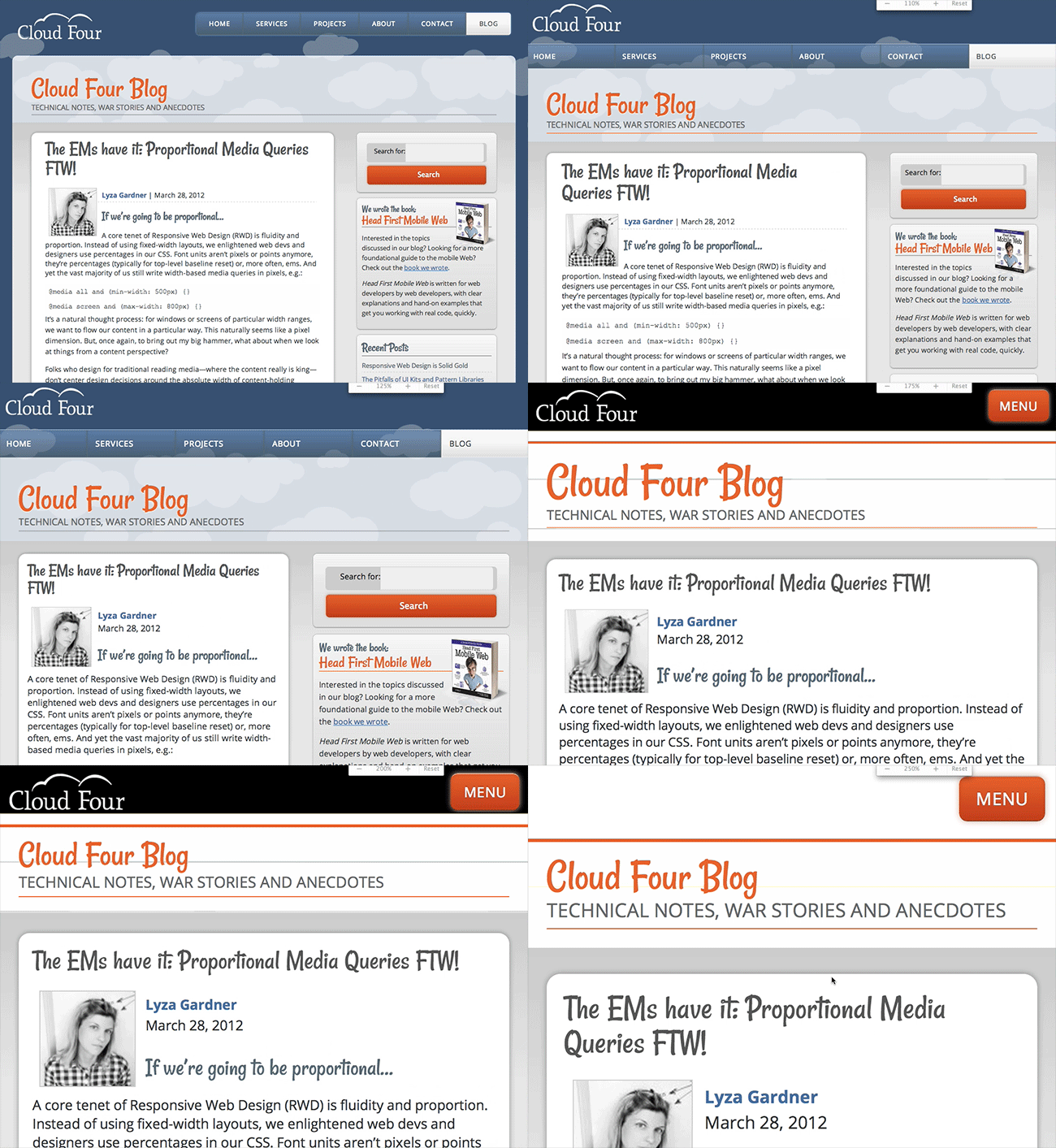
It would be nearly impossible for businesses to design for each and every individual device. Instead, when programming responsive designs, developers often:
Group the styling into the most typical device sizes for phones, tablets, and desktops. In this case, anything larger than 7 inches is usually displayed at desktop resolution or-
Use breakpoints (defined pixel widths that the display will adjust layout based on screen size) dependent upon the design and layout
It would be nearly impossible for businesses to design for each and every individual device. Instead, when programming responsive designs, developers often:
Group the styling into the most typical device sizes for phones, tablets, and desktops. In this case, anything larger than 7 inches is usually displayed at desktop resolution or-
Use breakpoints (defined pixel widths that the display will adjust layout based on screen size) dependent upon the design and layout
It would be nearly impossible for businesses to design for each and every individual device. Instead, when programming responsive designs, developers often:
Group the styling into the most typical device sizes for phones, tablets, and desktops. In this case, anything larger than 7 inches is usually displayed at desktop resolution or-
Use breakpoints (defined pixel widths that the display will adjust layout based on screen size) dependent upon the design and layout
It would be nearly impossible for businesses to design for each and every individual device. Instead, when programming responsive designs, developers often:
Group the styling into the most typical device sizes for phones, tablets, and desktops. In this case, anything larger than 7 inches is usually displayed at desktop resolution or-
Use breakpoints (defined pixel widths that the display will adjust layout based on screen size) dependent upon the design and layout
It would be nearly impossible for businesses to design for each and every individual device. Instead, when programming responsive designs, developers often:
Group the styling into the most typical device sizes for phones, tablets, and desktops. In this case, anything larger than 7 inches is usually displayed at desktop resolution or-
Use breakpoints (defined pixel widths that the display will adjust layout based on screen size) dependent upon the design and layout
It would be nearly impossible for businesses to design for each and every individual device. Instead, when programming responsive designs, developers often:
Group the styling into the most typical device sizes for phones, tablets, and desktops. In this case, anything larger than 7 inches is usually displayed at desktop resolution or-
Use breakpoints (defined pixel widths that the display will adjust layout based on screen size) dependent upon the design and layout
It would be nearly impossible for businesses to design for each and every individual device. Instead, when programming responsive designs, developers often:
Group the styling into the most typical device sizes for phones, tablets, and desktops. In this case, anything larger than 7 inches is usually displayed at desktop resolution or-
Use breakpoints (defined pixel widths that the display will adjust layout based on screen size) dependent upon the design and layout
It would be nearly impossible for businesses to design for each and every individual device. Instead, when programming responsive designs, developers often:
Group the styling into the most typical device sizes for phones, tablets, and desktops. In this case, anything larger than 7 inches is usually displayed at desktop resolution or-
Use breakpoints (defined pixel widths that the display will adjust layout based on screen size) dependent upon the design and layout
By:
Anne Miller vijayalaxmi Santosh Mhetre
Thursday, Aug 28, 2025


 No Preview Available
 No Preview Available

Leave a comment