

Browse
Culture And Society
Article with facebook URL in description
Article with facebook URL in description
https://www.facebook.com/share/v/16uoyPt5iZ/
By:
Anne Miller vijayalaxmi Santosh Mhetre
Thursday, Aug 28, 2025
AGRI-FOOD SYSTEMS
+7

No Preview Available
Leave a comment
Article with Youtube shorts in thumbnail image
Article with YouTube shorts in thumbnail image
By:
Anne Miller vijayalaxmi Santosh Mhetre
Thursday, Aug 28, 2025
AGRI-FOOD SYSTEMS
+7
Leave a comment
Article with normal web URL in description
Article with a normal web URL in the description
https://www.who.int/news-room/fact-sheets/detail/healthy-diet
By:
Anne Miller vijayalaxmi Santosh Mhetre
Thursday, Aug 28, 2025
AGRI-FOOD SYSTEMS
+7
No Preview Available
Leave a comment
Opportunity with twitter link in description
Twitter short
https://x.com/slater57649/status/1949539369649402124
By:
Anne Miller vijayalaxmi Santosh Mhetre
Thursday, Aug 28, 2025
AGRI-FOOD SYSTEMS
+7

No Preview Available
Leave a comment
Opportunity with YT shorts in description
Opportunity with YT shorts in the description
By:
Anne Miller vijayalaxmi Santosh Mhetre
Thursday, Aug 28, 2025
AGRI-FOOD SYSTEMS
+7
No Preview Available
Leave a comment
Opportunity with Facebook link
Opportunity with Facebook link
https://www.facebook.com/share/v/16uoyPt5iZ/
By:
Anne Miller vijayalaxmi Santosh Mhetre
Thursday, Aug 28, 2025
AGRI-FOOD SYSTEMS
+7
No Preview Available
Leave a comment
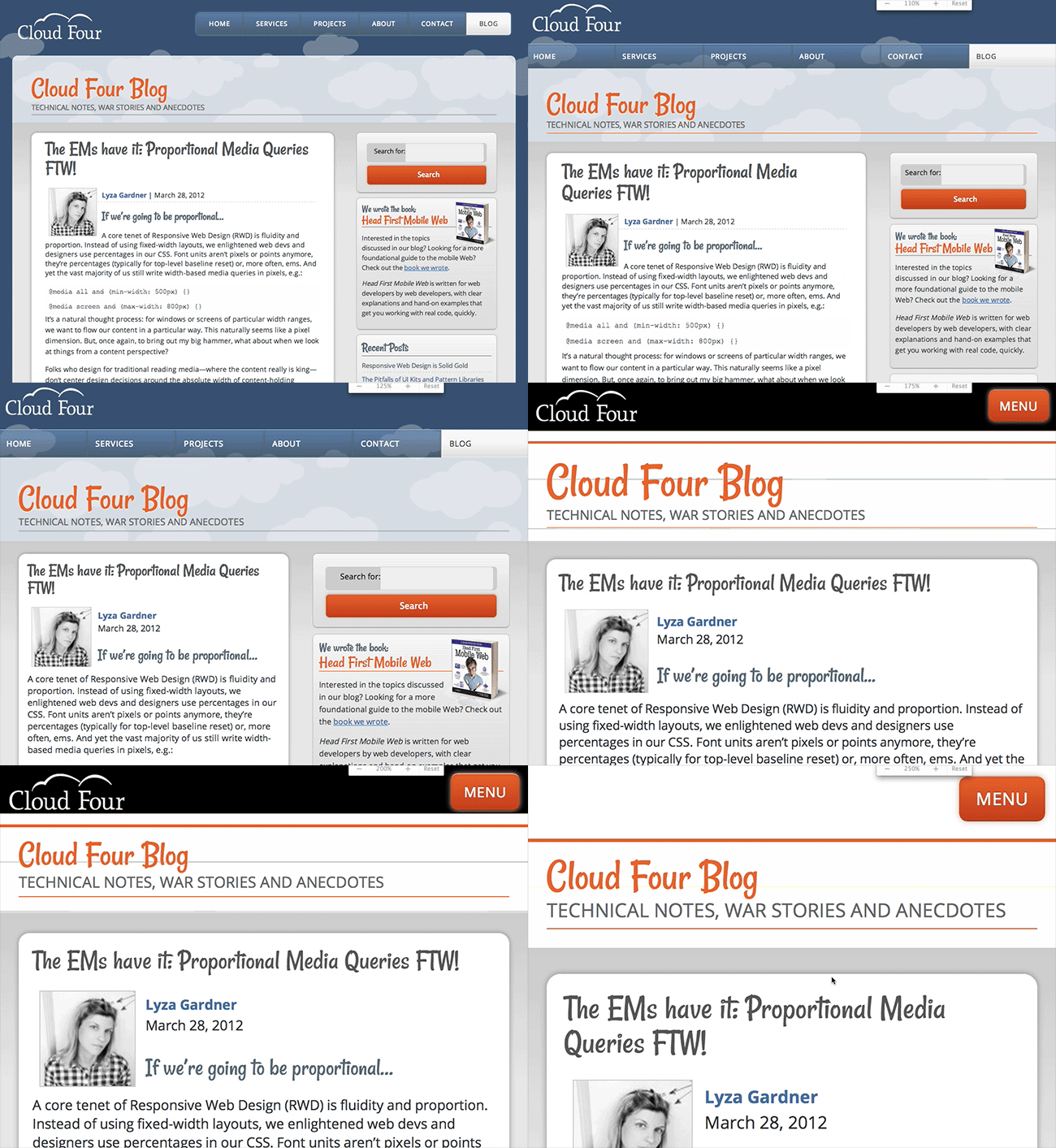
It would be nearly impossible for businesses to design for each and every individual device. Instead
It would be nearly impossible for businesses to design for each and every individual device. Instead, when programming responsive designs, developers often:
Group the styling into the most typical device sizes for phones, tablets, and desktops. In this case, anything larger than 7 inches is usually displayed at desktop resolution or-
Use breakpoints (defined pixel widths that the display will adjust layout based on screen size) dependent upon the design and layout
It would be nearly impossible for businesses to design for each and every individual device. Instead, when programming responsive designs, developers often:
Group the styling into the most typical device sizes for phones, tablets, and desktops. In this case, anything larger than 7 inches is usually displayed at desktop resolution or-
Use breakpoints (defined pixel widths that the display will adjust layout based on screen size) dependent upon the design and layout
It would be nearly impossible for businesses to design for each and every individual device. Instead, when programming responsive designs, developers often:
Group the styling into the most typical device sizes for phones, tablets, and desktops. In this case, anything larger than 7 inches is usually displayed at desktop resolution or-
Use breakpoints (defined pixel widths that the display will adjust layout based on screen size) dependent upon the design and layout
It would be nearly impossible for businesses to design for each and every individual device. Instead, when programming responsive designs, developers often:
Group the styling into the most typical device sizes for phones, tablets, and desktops. In this case, anything larger than 7 inches is usually displayed at desktop resolution or-
Use breakpoints (defined pixel widths that the display will adjust layout based on screen size) dependent upon the design and layout
It would be nearly impossible for businesses to design for each and every individual device. Instead, when programming responsive designs, developers often:
Group the styling into the most typical device sizes for phones, tablets, and desktops. In this case, anything larger than 7 inches is usually displayed at desktop resolution or-
Use breakpoints (defined pixel widths that the display will adjust layout based on screen size) dependent upon the design and layout
It would be nearly impossible for businesses to design for each and every individual device. Instead, when programming responsive designs, developers often:
Group the styling into the most typical device sizes for phones, tablets, and desktops. In this case, anything larger than 7 inches is usually displayed at desktop resolution or-
Use breakpoints (defined pixel widths that the display will adjust layout based on screen size) dependent upon the design and layout
It would be nearly impossible for businesses to design for each and every individual device. Instead, when programming responsive designs, developers often:
Group the styling into the most typical device sizes for phones, tablets, and desktops. In this case, anything larger than 7 inches is usually displayed at desktop resolution or-
Use breakpoints (defined pixel widths that the display will adjust layout based on screen size) dependent upon the design and layout
It would be nearly impossible for businesses to design for each and every individual device. Instead, when programming responsive designs, developers often:
Group the styling into the most typical device sizes for phones, tablets, and desktops. In this case, anything larger than 7 inches is usually displayed at desktop resolution or-
Use breakpoints (defined pixel widths that the display will adjust layout based on screen size) dependent upon the design and layout
By:
Anne Miller vijayalaxmi Santosh Mhetre
Thursday, Aug 28, 2025
AGRI-FOOD SYSTEMS
+1
No Preview Available
Leave a comment
Opportunity with embed code in description
By:
Anne Miller vijayalaxmi Santosh Mhetre
Thursday, Aug 28, 2025
CULTURE AND SOCIETY
+1

Leave a comment
Article with embed code in the description
By:
Anne Miller vijayalaxmi Santosh Mhetre
Tuesday, Aug 26, 2025
AGRI-FOOD SYSTEMS
+7
Leave a comment
When you buy a device, you will often see both screen size and resolution listed in the specs. The screensize is the physical measurement diagonally of the screen in inches. This is not to be confused with the resolution, which is the number of pixels on the screen often displayed as a width by height (i.e. 1024×768). Because devices with the same screen size can have very different resolutions, developers use viewports when they’re creating mobile friendly pages. Viewports are scaled down versions of resolutions that allows sites to be viewed more consistently across different devices. Viewports are often more standardized and smaller than resolution sizes.
While desktop and laptop displays are in landscape orientation (wider than tall), many mobile devices can be rotated to show websites in both landscape and portrait (taller than wide) orientations. This means that designers and developers must design for these differences.
By:
Anne Miller vijayalaxmi Santosh Mhetre
Tuesday, Aug 26, 2025
CULTURE AND SOCIETY


Leave a comment